Sunday, October 24, 2010





Hansika South Movie Images


Seetha ramula Kalyanam lankalo starring Nitin and Hansika Motwani in the lead is progressing at a brisk space. This movie is directed by Eshwar Reddy of Siddu From Srikakulam fame. Congress MLA Malla Vijaya Prakash is producing this film under Welfare Creations banner. Anoop Rubens is the music director. Sitaramula Kalyanam film is said to be a romantic entertainer. The audio launch of the film is planned on December 19th. The film is slated to release in January first week.


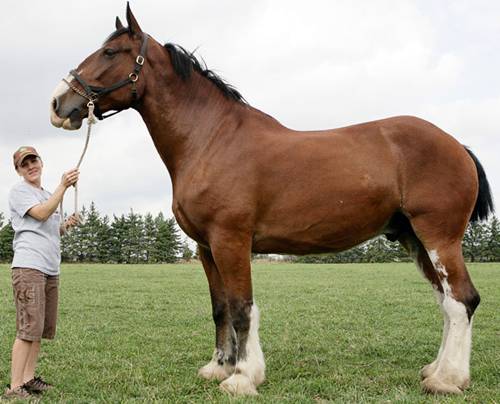
Poe the Clydesdale World's tallest Horse
It’s lucky he’s such a good-natured beast. Because if this horse turned grumpy, there’s no way a petite woman armed with a rope could hold him back. Standing 20.2 hands - that’s 6ft 10in - at the shoulder and weighing 200 stone, Poe is the tallest horse in the world, according to owner Shereen Thompson.

Mane attraction: Clydesdale Poe with 5ft 3in tall owner Shereen Thompson in Tupperville, Ontario in Canada, more images after the break...

Inching above his rivals: Poe, shown here with another horse on the Canadian farm, stands at 20.2 hands. The Clydesdale is 2in bigger than the horse from Texas currently listed in the Guinness Book of Records, she believes - and dwarfs her own 5ft 3in frame. He lives on Miss Thompson’s farm in Tupperville, Ontario, in Canada. Poe - who is 10ft tall with his head held high - needs two bales of hay a day, 10lb of grain and 75 gallons of water. Miss Thompson rescued Poe - named after her favourite writer, Edgar Allen Poe - in February 2008.

Ms Thompson, who is just 5ft3, is dwarfed by the gentle giant Neigh high: Ms Thompson, who is just 5ft 3in, is dwarfed by the gentle giant He used to work in the city of London, Ontario, hauling crates of Budweiser - ‘rather like the horses of Youngs Brewery used to in London, England,' Miss Thompson explained. The ten-year-old has since become a firm favourite at local fairs - where she said he behaves like ‘a real puppy’. ‘But he does sometimes forget his strength and drags me along if he wants to play or go chasing something,’ she added.Giddy up... and up and up: Poe, eats two bales of hay a day, gallops through the fields.

Giddy up... and up and up: Poe, eats two bales of hay a day, gallops through the fields Clydesdale horses were first bred in what was then Clydesdale, now Lanarkshire, in the mid-18th century. They usually stand at around 5ft 4in at the shoulder.

New Ocean to form inside Africa ?

A 35-mile rift in the desert of Ethiopia will eventually become a new ocean or sea, researchers now confirm. The crack, 20 feet wide in spots, opened in 2005. Some geologists believed then that it would spawn a new
ocean. But that view was controversial, and the rift had not been well studied. A new study involving an international team of scientists and reported in the journal Geophysical Research Letters finds the processes creating the rift are nearly identical to what goes on at the bottom of oceans, further indication a new sea is in the region's future. The same rift activity is slowly parting the Red Sea, too. Using newly gathered seismic data from 2005, researchers reconstructed the event to show the rift tore open along its entire 35-mile length in just days. Dabbahu, a volcano at the northern end of the rift, erupted first, then magma pushed up through the middle of the rift area and began "unzipping" the rift in both directions, the researchers explained in a statement today. "We know that seafloor ridges are created by a similar intrusion of magma into a rift, but we never knew that a huge length of the ridge could break open at once like this," said Cindy Ebinger, professor of earth and environmental sciences at the University of Rochester and co-author of the study. The result shows that highly active volcanic boundaries along the edges of tectonic ocean plates may suddenly break apart in large sections, instead of in bits, as the leading theory held. And such sudden large-scale events on land pose a much more serious hazard to populations living near the rift than would several smaller events, Ebinger said. "The whole point of this study is to learn whether what is happening in Ethiopia is like what is happening at the bottom of the ocean where it's almost impossible for us to go," says Ebinger. "We knew that if we could establish that, then Ethiopia would essentially be a unique and superb ocean-ridge laboratory for us. Because of the unprecedented cross-border collaboration behind this research, we now know that the answer is yes, it is analogous." The African and Arabian plates meet in the remote Afar desert of Northern Ethiopia and have been spreading apart in a rifting process — at a speed of less than 1 inch per year — for the past 30 million years. This rifting formed the 186-mile Afar depression and the Red Sea. The thinking is that the Red Sea will eventually pour into the new sea in a million years or so. The new body of water would connect to the Red Sea and the Gulf of Aden, an arm of the Arabian Sea between Yemen on the Arabian Peninsula and Somalia in eastern Africa. Atalay Ayele, professor at the Addis Ababa University in Ethiopia, led the investigation, gathering seismic data with help from neighboring Eritrea and Ghebrebrhan Ogubazghi, professor at the Eritrea Institute of Technology, and from Yemen with the help of Jamal Sholan of the National Yemen Seismological Observatory Center. New Via Link
ocean. But that view was controversial, and the rift had not been well studied. A new study involving an international team of scientists and reported in the journal Geophysical Research Letters finds the processes creating the rift are nearly identical to what goes on at the bottom of oceans, further indication a new sea is in the region's future. The same rift activity is slowly parting the Red Sea, too. Using newly gathered seismic data from 2005, researchers reconstructed the event to show the rift tore open along its entire 35-mile length in just days. Dabbahu, a volcano at the northern end of the rift, erupted first, then magma pushed up through the middle of the rift area and began "unzipping" the rift in both directions, the researchers explained in a statement today. "We know that seafloor ridges are created by a similar intrusion of magma into a rift, but we never knew that a huge length of the ridge could break open at once like this," said Cindy Ebinger, professor of earth and environmental sciences at the University of Rochester and co-author of the study. The result shows that highly active volcanic boundaries along the edges of tectonic ocean plates may suddenly break apart in large sections, instead of in bits, as the leading theory held. And such sudden large-scale events on land pose a much more serious hazard to populations living near the rift than would several smaller events, Ebinger said. "The whole point of this study is to learn whether what is happening in Ethiopia is like what is happening at the bottom of the ocean where it's almost impossible for us to go," says Ebinger. "We knew that if we could establish that, then Ethiopia would essentially be a unique and superb ocean-ridge laboratory for us. Because of the unprecedented cross-border collaboration behind this research, we now know that the answer is yes, it is analogous." The African and Arabian plates meet in the remote Afar desert of Northern Ethiopia and have been spreading apart in a rifting process — at a speed of less than 1 inch per year — for the past 30 million years. This rifting formed the 186-mile Afar depression and the Red Sea. The thinking is that the Red Sea will eventually pour into the new sea in a million years or so. The new body of water would connect to the Red Sea and the Gulf of Aden, an arm of the Arabian Sea between Yemen on the Arabian Peninsula and Somalia in eastern Africa. Atalay Ayele, professor at the Addis Ababa University in Ethiopia, led the investigation, gathering seismic data with help from neighboring Eritrea and Ghebrebrhan Ogubazghi, professor at the Eritrea Institute of Technology, and from Yemen with the help of Jamal Sholan of the National Yemen Seismological Observatory Center. New Via Link

Tim Wright/University of OxfordA crevice in the Afar Triangle signals the birth of an ocean. In ten million years this ocean will split the African continent.

Dereje Ayalew/Universität Addis AbbabaScientists examine crevices in the Afar Triangle.

SeaWiFS Project/NASA/Goddard Space Flight Center/ORBIMAGEAn aerial view of north-eastern Africa. The Afar Triangle is the sandy-colored triangle bordering on the sea.

Anthony PhilpottsA view of the East African Rift System, which is already largely below sea level.

Subscribe to:
Posts (Atom)
